Buy duemmersee.eu ?
We are moving the project
duemmersee.eu .
Are you interested in purchasing the domain
duemmersee.eu ?
domain@kv-gmbh.de · 0541-91531010
Buy duemmersee.eu ?
What is dispersion in physics?
Dispersion in physics refers to the separation of different wavelengths of light as they pass through a medium. This separation occurs because the speed of light is different for different wavelengths, causing them to bend at different angles. This effect is responsible for phenomena such as the splitting of white light into its component colors when passing through a prism. Dispersion is also important in the study of wave propagation, where different wavelengths of waves can travel at different speeds through a medium, leading to their separation over time. **
How do you apply dispersion paint?
To apply dispersion paint, start by preparing the surface by cleaning it thoroughly and making any necessary repairs. Next, apply a primer if needed. Stir the dispersion paint well before use and apply it evenly using a brush, roller, or sprayer. Work in small sections, overlapping each stroke to ensure even coverage. Allow the paint to dry completely between coats, and apply additional coats as needed for the desired finish. **

Similar search terms for Dispersion
Top-Angebote
Products related to Dispersion:
-
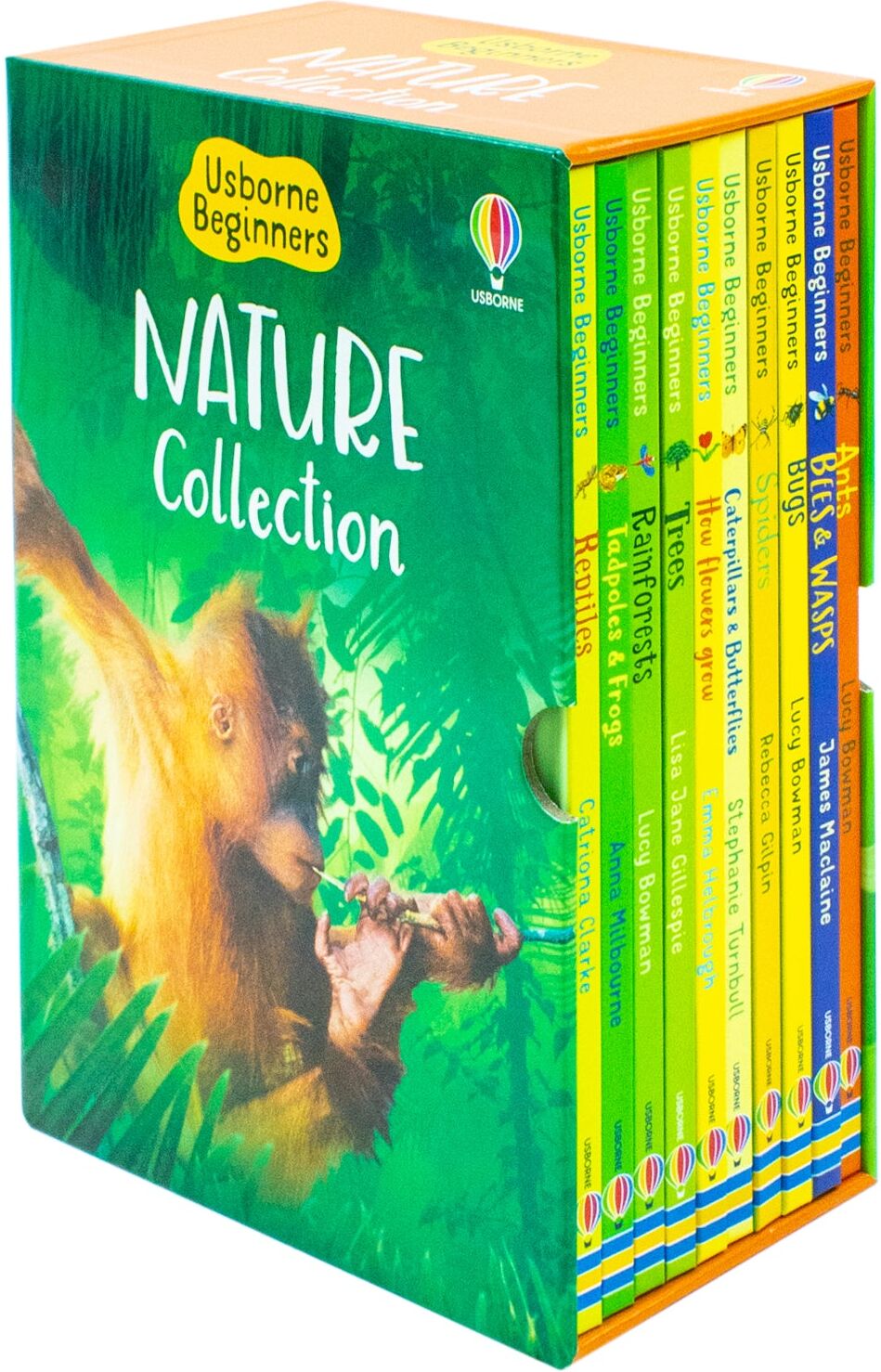
Usborne Publishing Usborne Beginners Nature Series – 10 Book Collection Set Children’s Wildlife & Nature Books (Ants, Bugs, Spiders, Trees, Rainforests) KS1 KS2Usborne Beginners Nature 10 Books Box Set Reptiles This is a fantastic brand new addition to the 'Beginners' series, designed to provide an informative introduction to trees and plant-life for young readers. Tadpoles and Frogs Vivid, full colour illustrations and photographs on every page, accompanied by short, informative text. Rainforest It offers a terrific reading practice for children who prefer fact to fiction. It is developed with a reading expert from Roehampton University to help young readers grow in confidence. Trees This is a fantastic brand new addition to the 'Beginners' series; designed to provide an informative introduction to trees and plant-life for young readers. How Flowers Grow How do flowers grow in dry deserts? How do animals help to spread seeds? Which flower smells like rotting meat? Caterpillars and Butterflies Usborne Beginners are colourful information books for children beginning to read on their own. Spiders Usborne Beginners are colourful information books for children beginning to read on their own. Bugs Usborne Beginners are colourful information books for children beginning to read on their own. Bees and Wasps A slim and unintimidating book which belies its contents - a wealth of information; much of which will be new even to adults. Ants Where do ants live? What do they eat? How much weight can they carry? Little children can find out the answers to these questions and much more in this simple introduction to the world of ants. Related Tags: Usborne, Usbourne14,99 £*Shipping: 2,99 £Secure redirect to the provider
-
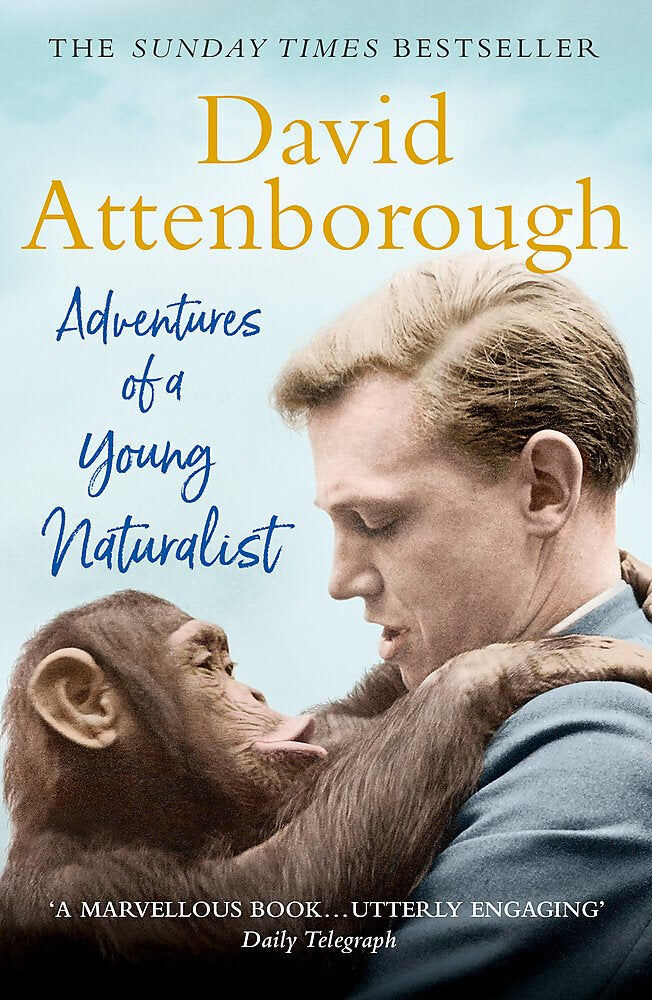
Two Roads Adventures of a Young Naturalist by Sir David Attenborough - Zoo Quest Expeditions Memoir - Paperback - Nature & WildlifeJoin young David Attenborough on his thrilling adventures as he travels the globe to capture rare and elusive animals for London Zoo. This gripping paperback memoir, 'Adventures of a Young Naturalist', gathers his early expeditions into one compelling narrative, tracing the roots of the broadcaster's extraordinary career and his lifelong devotion to the natural world. In 1954, Attenborough embarked on a journey to film his travels for a fledgling BBC series called Zoo Quest. He and his team trekked through remote landscapes in search of giant anteaters in Guyana, Komodo dragons in Indonesia, and armadillos in Paraguay. Along the way, he lived alongside local tribes, navigated unpredictable terrain and weather, and encountered an unforgettable cast of creatures. This paperback edition is a fascinating account of Attenborough's early years as a naturalist, written by one of Britain's most trusted voices on conservation.3,99 £*Shipping: 2,99 £Secure redirect to the provider
-
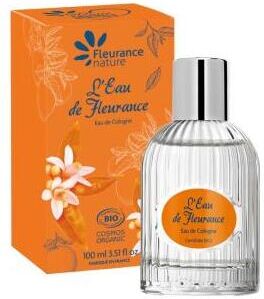
Fleurance Nature Cologne Water Spray 100 mlHealth and Beauty Colonies Fleurance Nature Cologne Water Spray 100 ml A natural and certified COSMOS ORGANIC mixed cologne. Fragrance around the Hesperides. Instructions for use: External use.\ After showering, spray on the neck and décolleté, on skin that is still damp, and let it air dry.18,76 £*Shipping: 3,99 £Secure redirect to the provider

-
How do you mix dispersion paints?
To mix dispersion paints, start by pouring the desired amount of paint into a mixing container. Then, add the appropriate amount of water according to the paint manufacturer's instructions. Use a stirring stick or paint mixer to thoroughly mix the paint and water together until the consistency is smooth and even. It's important to follow the specific instructions provided by the paint manufacturer to ensure the proper mixing ratio and achieve the best results. **
-
Is dispersion the same as standard deviation?
Dispersion and standard deviation are related concepts, but they are not the same. Dispersion refers to the spread or variability of a set of data points, while standard deviation is a specific measure of dispersion. Standard deviation is a statistical measure that quantifies the amount of variation or dispersion of a set of values. It is calculated by taking the square root of the variance, which is the average of the squared differences from the mean. Therefore, while dispersion is a broader concept, standard deviation is a specific statistical measure of dispersion. **
-
How do you calculate the range of dispersion?
The range of dispersion is calculated by subtracting the smallest value from the largest value in a data set. This gives the total spread or range of the data. For example, if a data set has values ranging from 10 to 50, the range of dispersion would be 50 - 10 = 40. The range of dispersion is a simple measure of variability in a data set and is useful for understanding the spread of values. **
-
What is the meaning of dispersion in biology?
In biology, dispersion refers to the pattern of spacing of individuals within a population. It describes how individuals are distributed in a particular area, whether they are clumped together, evenly spaced, or randomly dispersed. Understanding dispersion patterns can provide insights into the social structure, resource availability, and interactions within a population. It is an important concept in ecology and population biology as it helps scientists study the dynamics and behavior of species in their natural habitats. **
How can one check for dispersion in statistics?
One way to check for dispersion in statistics is to calculate the range, which is the difference between the maximum and minimum values in a dataset. A larger range indicates greater dispersion. Another method is to calculate the variance or standard deviation, which measures the average distance of each data point from the mean. A higher variance or standard deviation indicates greater dispersion. Additionally, creating a box plot or histogram can visually show the spread of the data and help identify any outliers that may contribute to dispersion. **
Can you apply dispersion paint on acrylic paint?
No, it is not recommended to apply dispersion paint on top of acrylic paint. Dispersion paint is a water-based paint that is typically used for interior walls and ceilings, while acrylic paint is a type of fast-drying paint that is commonly used for artistic and decorative purposes. Mixing these two types of paint may result in poor adhesion, cracking, or peeling. It is best to use the appropriate type of paint for the specific surface and purpose to ensure a successful and long-lasting finish. **
Top-Angebote
Products related to Dispersion:
-
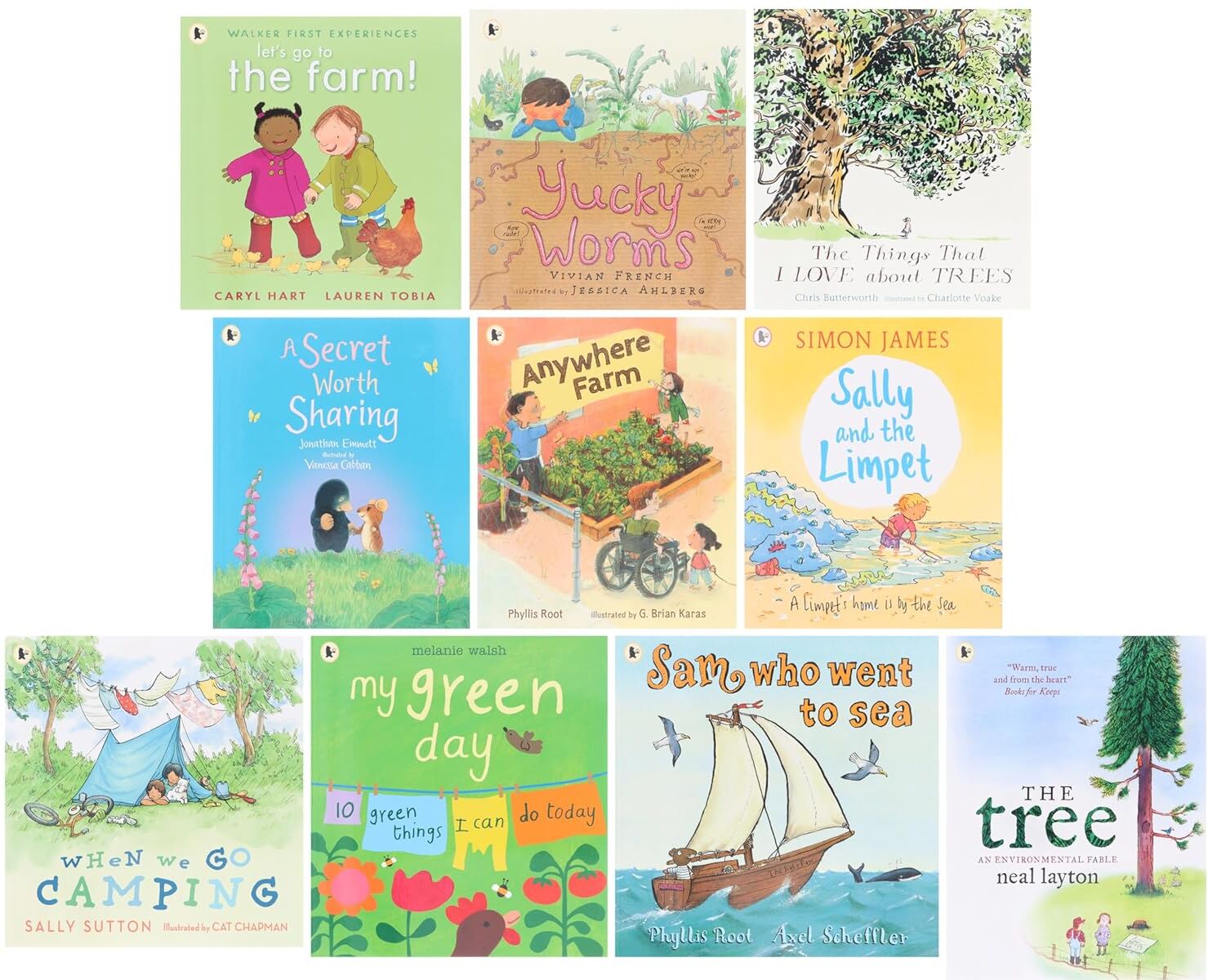
Walker Books UK Ltd The Great Outdoors 10 Picture Books Collection Set Nature, Trees, Wildlife, Farm, Camping & Adventure Stories for ChildrenThe Great Outdoors: 10 Wild and Wonderful Picture Books Collection Set Ignite a love of nature and outdoor adventure with The Great Outdoors – 10 Wild and Wonderful Picture Books Collection Set.This beautifully illustrated bundle introduces children to the magic of trees, farms, forests, wildlife, camping, seashores, and the joy of exploring the world around them. Packed with heartwarming stories, gentle messages, and rich nature themes, these books encourage imagination, curiosity, and a lifelong appreciation for the outdoors.Perfect for bedtime reading, early learning, classroom storytime, or little explorers who love adventure. Ideal for ages 3–7, preschoolers, nursery settings, and early readers. Titles in this Set: 1. The Things That I Love About Trees 2. The Tree 3. Sally and the Limpet 4. Anywhere Farm 5. When We Go Camping 6. A Secret Worth Sharing 7. Lets Go To The Farm! 8. Yucky Worms 9. My Green Day 10. Sam Who Went to Sea The Things That I Love About Trees A very young non-fiction picture book that looks at how a tree changes with the seasons, with charming illustrations by Charlotte Voake.Learn how a plum tree changes with the seasons in this charming... The Tree A delightful picture book with a wonderful twist which encourages young children to think about the way animals and humans live side by side.The tree. Home to a family of birds in their nest, squirrels... Sally and the Limpet When Sally pulls a limpet off a rock at the beach, it sticks to her finger – and nothing she, her family or her friends do can unstick it. Sally's teacher says that limpets live on the same rock for twenty years. So will Sally ever get the limpet off her finger? Anywhere Farm For an anywhere farm, here's all that you need: soil and sunshine, some water, a seed. When We Go Camping When we go camping, we bang in the pegs, Bang in the pegs, bang in the pegs. Guy ropes are tricky; they trip up your legs! A Secret Worth Sharing Mole's new friend, Mouse, is so special, he doesn't want to share her with anyone and decides to keep her secret. but some secrets are worth sharing. Lets Go To The Farm Let's go to the farm with Billy and Bee! There's SO much to do, and SO much to see! Baby lambs and guinea pigs, and chickens on the run, Let's get your wellies on and join in all the fun! Yucky Worms You can't be FREINDS with an earthworm... You can't even tell WHICH end is which! Or CAN you My Green Day Here are ten things we can all do to make every day a green day. Sam Who Went to Sea Sam, the river rat, dreams of going to sea. Day and night, whatever he is doing, his thoughts turn seawards.12,90 £*Shipping: 2,99 £Secure redirect to the provider
-
WAGNER Universal W 575 FLEXiO paint sprayer for dispersion/latex paints, varnishes & glazes - Interior Usage, Covers 15 m²-6 min, Capacity 1300 ml/800 ml, 630 W, New(Damaged Box)Suitable for emulsion and latex paints designed for indoor applications. When paired with the included Standard spray attachment, it can also accommodate water-based and solvent-based enamels, varnishes, protective wood-staining products, oils, and various other substances. Ideal for projects of various sizes, from small to large. Incorporating Flexio technology, it delivers consistent coverage with all standard materials, even unthinned ones, in just one application. Featuring a detachable gun for quick changes of spray attachments and effortless cleaning. Equipped with two air volume settings to achieve optimal outcomes with materials of both low and high viscosity. The adjustable paint jet allows for precise adaptation to the object being painted. Allows for continuous adjustment of material volume, ensuring precision in painting. Incorporates a patented I-SPRAY nozzle for fine atomization and excellent viscosity tolerance, even when working with highly viscous materials. Powered by the X-BOOST turbine for added potency and increased working speed.119,00 £*Shipping: 0,00 £Secure redirect to the provider
-
Usborne Publishing Usborne Beginners Nature Series – 10 Book Collection Set Children’s Wildlife & Nature Books (Ants, Bugs, Spiders, Trees, Rainforests) KS1 KS2Usborne Beginners Nature 10 Books Box Set Reptiles This is a fantastic brand new addition to the 'Beginners' series, designed to provide an informative introduction to trees and plant-life for young readers. Tadpoles and Frogs Vivid, full colour illustrations and photographs on every page, accompanied by short, informative text. Rainforest It offers a terrific reading practice for children who prefer fact to fiction. It is developed with a reading expert from Roehampton University to help young readers grow in confidence. Trees This is a fantastic brand new addition to the 'Beginners' series; designed to provide an informative introduction to trees and plant-life for young readers. How Flowers Grow How do flowers grow in dry deserts? How do animals help to spread seeds? Which flower smells like rotting meat? Caterpillars and Butterflies Usborne Beginners are colourful information books for children beginning to read on their own. Spiders Usborne Beginners are colourful information books for children beginning to read on their own. Bugs Usborne Beginners are colourful information books for children beginning to read on their own. Bees and Wasps A slim and unintimidating book which belies its contents - a wealth of information; much of which will be new even to adults. Ants Where do ants live? What do they eat? How much weight can they carry? Little children can find out the answers to these questions and much more in this simple introduction to the world of ants. Related Tags: Usborne, Usbourne14,99 £*Shipping: 2,99 £Secure redirect to the provider
-
What is dispersion in physics?
Dispersion in physics refers to the separation of different wavelengths of light as they pass through a medium. This separation occurs because the speed of light is different for different wavelengths, causing them to bend at different angles. This effect is responsible for phenomena such as the splitting of white light into its component colors when passing through a prism. Dispersion is also important in the study of wave propagation, where different wavelengths of waves can travel at different speeds through a medium, leading to their separation over time. **
-
How do you apply dispersion paint?
To apply dispersion paint, start by preparing the surface by cleaning it thoroughly and making any necessary repairs. Next, apply a primer if needed. Stir the dispersion paint well before use and apply it evenly using a brush, roller, or sprayer. Work in small sections, overlapping each stroke to ensure even coverage. Allow the paint to dry completely between coats, and apply additional coats as needed for the desired finish. **
-
How do you mix dispersion paints?
To mix dispersion paints, start by pouring the desired amount of paint into a mixing container. Then, add the appropriate amount of water according to the paint manufacturer's instructions. Use a stirring stick or paint mixer to thoroughly mix the paint and water together until the consistency is smooth and even. It's important to follow the specific instructions provided by the paint manufacturer to ensure the proper mixing ratio and achieve the best results. **
-
Is dispersion the same as standard deviation?
Dispersion and standard deviation are related concepts, but they are not the same. Dispersion refers to the spread or variability of a set of data points, while standard deviation is a specific measure of dispersion. Standard deviation is a statistical measure that quantifies the amount of variation or dispersion of a set of values. It is calculated by taking the square root of the variance, which is the average of the squared differences from the mean. Therefore, while dispersion is a broader concept, standard deviation is a specific statistical measure of dispersion. **
Similar search terms for Dispersion
-
Two Roads Adventures of a Young Naturalist by Sir David Attenborough - Zoo Quest Expeditions Memoir - Paperback - Nature & WildlifeJoin young David Attenborough on his thrilling adventures as he travels the globe to capture rare and elusive animals for London Zoo. This gripping paperback memoir, 'Adventures of a Young Naturalist', gathers his early expeditions into one compelling narrative, tracing the roots of the broadcaster's extraordinary career and his lifelong devotion to the natural world. In 1954, Attenborough embarked on a journey to film his travels for a fledgling BBC series called Zoo Quest. He and his team trekked through remote landscapes in search of giant anteaters in Guyana, Komodo dragons in Indonesia, and armadillos in Paraguay. Along the way, he lived alongside local tribes, navigated unpredictable terrain and weather, and encountered an unforgettable cast of creatures. This paperback edition is a fascinating account of Attenborough's early years as a naturalist, written by one of Britain's most trusted voices on conservation.3,99 £*Shipping: 2,99 £Secure redirect to the provider
-
Fleurance Nature Cologne Water Spray 100 mlHealth and Beauty Colonies Fleurance Nature Cologne Water Spray 100 ml A natural and certified COSMOS ORGANIC mixed cologne. Fragrance around the Hesperides. Instructions for use: External use.\ After showering, spray on the neck and décolleté, on skin that is still damp, and let it air dry.18,76 £*Shipping: 3,99 £Secure redirect to the provider
-
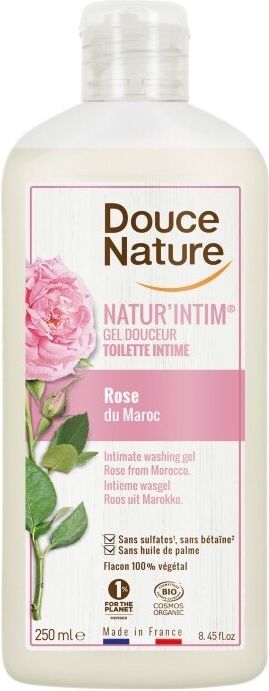
Douce Nature Intimate Rose Water Gel 250 mlHealth and Beauty Intimate hygiene Douce Nature Intimate Rose Water Gel 250 ml Intimate Hygiene Gel enriched with Moroccan rose water Suitable for all skin types. Balances the skin of the intimate area and reduces discomfort How to use: Shake well before use, apply gently to the skin and rinse with plenty of water. In case of contact with eyes, rinse thoroughly and keep out of the reach of children. don't swallow it5,56 £*Shipping: 3,99 £Secure redirect to the provider
-
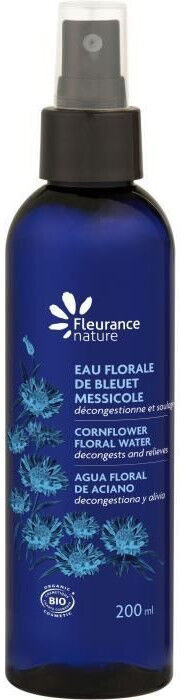
Fleurance Nature Organic Cornflower Floral Water 200 mlHealth and Beauty Facial Cleansing Fleurance Nature Organic Cornflower Floral Water 200 ml Decongests and soothes: -Cools and brightens the look -Diffuses traces of fatigue -Can be used in compresses on closed eyes Light and soft mist Suitable for removing make-up from sensitive eyes Product tested under dermatological control The cornflowers used to obtain this floral water have been carefully selected and harvested in organic farming in France. 83% of users find it refreshing to the skin. 75% of users find that it calms the skin and decongests the eyes.7,03 £*Shipping: 3,99 £Secure redirect to the provider
-
How do you calculate the range of dispersion?
The range of dispersion is calculated by subtracting the smallest value from the largest value in a data set. This gives the total spread or range of the data. For example, if a data set has values ranging from 10 to 50, the range of dispersion would be 50 - 10 = 40. The range of dispersion is a simple measure of variability in a data set and is useful for understanding the spread of values. **
-
What is the meaning of dispersion in biology?
In biology, dispersion refers to the pattern of spacing of individuals within a population. It describes how individuals are distributed in a particular area, whether they are clumped together, evenly spaced, or randomly dispersed. Understanding dispersion patterns can provide insights into the social structure, resource availability, and interactions within a population. It is an important concept in ecology and population biology as it helps scientists study the dynamics and behavior of species in their natural habitats. **
-
How can one check for dispersion in statistics?
One way to check for dispersion in statistics is to calculate the range, which is the difference between the maximum and minimum values in a dataset. A larger range indicates greater dispersion. Another method is to calculate the variance or standard deviation, which measures the average distance of each data point from the mean. A higher variance or standard deviation indicates greater dispersion. Additionally, creating a box plot or histogram can visually show the spread of the data and help identify any outliers that may contribute to dispersion. **
-
Can you apply dispersion paint on acrylic paint?
No, it is not recommended to apply dispersion paint on top of acrylic paint. Dispersion paint is a water-based paint that is typically used for interior walls and ceilings, while acrylic paint is a type of fast-drying paint that is commonly used for artistic and decorative purposes. Mixing these two types of paint may result in poor adhesion, cracking, or peeling. It is best to use the appropriate type of paint for the specific surface and purpose to ensure a successful and long-lasting finish. **
* All prices are inclusive of VAT and, if applicable, plus shipping costs. The offer information is based on the details provided by the respective shop and is updated through automated processes. Real-time updates do not occur, so deviations can occur in individual cases. ** Note: Parts of this content were created by AI.