Buy duemmersee.eu ?
We are moving the project
duemmersee.eu .
Are you interested in purchasing the domain
duemmersee.eu ?
domain@kv-gmbh.de · 0541-91531010
Buy duemmersee.eu ?
What is the difference between paper chromatography and gas chromatography?
Paper chromatography involves the separation of compounds based on their affinity to the stationary phase (paper), while gas chromatography separates compounds based on their volatility and interaction with the mobile phase (gas). In paper chromatography, the mobile phase is a liquid solvent, whereas in gas chromatography, the mobile phase is a gas. Gas chromatography is typically more sensitive and provides better resolution compared to paper chromatography, making it more suitable for analyzing complex mixtures of compounds. **
What happens during chromatography?
During chromatography, a mixture of substances is separated into its individual components based on their different affinities for a stationary phase and a mobile phase. The sample is applied to the stationary phase, and the mobile phase is passed through the stationary phase. As the mobile phase moves through the stationary phase, the components of the mixture will interact differently with the stationary phase, causing them to separate and move at different rates. This results in the components being eluted from the column at different times, allowing for their individual identification and quantification. **


Similar search terms for Chromatography
Top-Angebote
Products related to Chromatography:
-
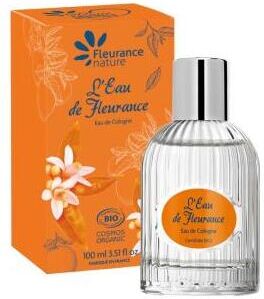
Fleurance Nature Cologne Water Spray 100 mlHealth and Beauty Colonies Fleurance Nature Cologne Water Spray 100 ml A natural and certified COSMOS ORGANIC mixed cologne. Fragrance around the Hesperides. Instructions for use: External use.\ After showering, spray on the neck and décolleté, on skin that is still damp, and let it air dry.18,76 £*Shipping: 3,99 £Secure redirect to the provider
-
Arcturus Children's Encyclopedia of Animals by Michael Leach Visual Guide to the Animal Kingdom Wildlife & Nature Reference Book for KidsExplore the incredible diversity of the natural world with Children's Encyclopedia of Animals: A Visual Guide to the Animal Kingdom by Michael Leach. Designed as an engaging reference book for young animal enthusiasts, this visual encyclopedia introduces children to the fascinating creatures that share our planet. Readers can discover animals from across the natural world, learning about different species, their characteristics, behaviours, habitats and remarkable adaptations. The accessible reference format makes it easy for children to explore topics that interest them while developing their knowledge of animals, wildlife, habitats and nature. With an emphasis on visual learning, this animal encyclopedia is a useful addition to a child's home reference library. It's ideal for curious young readers who love everything from mammals and birds to reptiles, amphibians, fish and other amazing creatures. Perfect for independent reading, school projects, homework and general knowledge, Children's Encyclopedia of Animals combines learning and discovery in an accessible guide to the animal kingdom. Key Features Comprehensive children's animal encyclopedia Visual guide to the fascinating animal kingdom Written by Michael Leach Introduces children to animals and wildlife from around the world Covers animal characteristics, habitats and behaviour Encourages curiosity about wildlife and the natural world Useful reference resource for school projects and homework Great educational gift for young animal lovers5,99 £*Shipping: 2,99 £Secure redirect to the provider
-
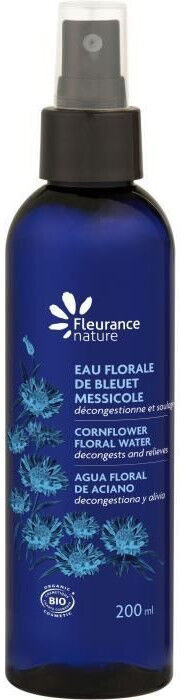
Fleurance Nature Organic Cornflower Floral Water 200 mlHealth and Beauty Facial Cleansing Fleurance Nature Organic Cornflower Floral Water 200 ml Decongests and soothes: -Cools and brightens the look -Diffuses traces of fatigue -Can be used in compresses on closed eyes Light and soft mist Suitable for removing make-up from sensitive eyes Product tested under dermatological control The cornflowers used to obtain this floral water have been carefully selected and harvested in organic farming in France. 83% of users find it refreshing to the skin. 75% of users find that it calms the skin and decongests the eyes.7,02 £*Shipping: 3,99 £Secure redirect to the provider
-
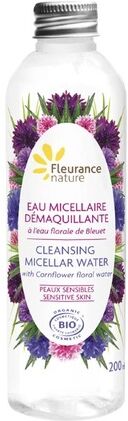
Fleurance Nature Micellar Cleansing Water Bio with CornflowerHealth and Beauty Facial Cleansing Fleurance Nature Micellar Cleansing Water Bio with Cornflower For a better respect for the skin, even the most sensitive ones! For a calm, fresh and clean skin: -Removes make-up and gently cleanses the face and eyes -With cornflower floral water and aloe vera -Indicated for all skin types, even the most sensitive Non-astringent, non-sticky, does not sting the eyes Formula without soap Tested under ophthalmological control Daily use, without rinsing Cornflower: Annual plant of the Asteraceae family. Its floral water is known to decongest and calm the sensation of swelling of the eyelids and the fragile contour of the eyes. Aloe vera: Vivid fat plant of the Alliaceae family. Provides comfort and softness to the skin while preventing the sensation of tightness often associated with removing makeup. Micellar water is a combination of water and an amphiphilic substance (from a coconut extract in our micellar water) capable of dissolving fat and, therefore, effectively removing fatty substances, powders and impurities from the skin. This amphiphilic substance dissolves in water in the form of extremely fine particles: it is these microparticles that, when combined with the perfume contained in the product, take the form of so-called "micelles". Slightly foamy, a micellar water therefore has the particularity of combining the freshness of an aqueous solution with the effectiveness of a make-up removal oil. All this in a single, simple and effective makeup removal and care guideline that does not require rinsing the face with plenty of water thanks to its very mild cleansing effect.11,86 £*Shipping: 3,99 £Secure redirect to the provider

-
Is there a difference between chromatography and thin layer chromatography of amino acids?
Yes, there is a difference between chromatography and thin layer chromatography (TLC) of amino acids. Chromatography is a general term for a technique used to separate and analyze mixtures, while TLC is a specific type of chromatography that uses a thin layer of adsorbent material on a flat support to separate compounds. In the case of amino acids, both techniques can be used to separate and analyze the different amino acids present in a mixture, but TLC is a quicker and simpler method that is often used for preliminary analysis or for educational purposes. Traditional chromatography methods, such as high-performance liquid chromatography (HPLC), may offer higher resolution and sensitivity for more detailed analysis of amino acids. **
-
What is paper chromatography in chemistry?
Paper chromatography is a technique used in chemistry to separate and analyze mixtures of substances. It involves placing a small spot of the mixture on a strip of paper and then allowing a solvent to move up the paper through capillary action. As the solvent moves, it carries the different components of the mixture at different rates, causing them to separate based on their affinity for the paper and the solvent. This technique is commonly used in the identification of unknown substances and in the analysis of complex mixtures. **
-
What is the principle of chromatography and can you give an example of different chromatography methods?
Chromatography is a technique used to separate and analyze complex mixtures based on the differential interactions between the components of the mixture and a stationary phase. The principle of chromatography involves the sample being dissolved in a mobile phase and passed through a stationary phase, where the components of the sample interact differently with the stationary phase, causing them to separate. There are several types of chromatography methods, including gas chromatography (GC), liquid chromatography (LC), and high-performance liquid chromatography (HPLC). In gas chromatography, the mobile phase is a gas, while in liquid chromatography, the mobile phase is a liquid. High-performance liquid chromatography is a more advanced form of liquid chromatography that uses high pressure to separate components more efficiently. **
-
What is the principle of chromatography and can you provide an example of different chromatography methods?
Chromatography is a technique used to separate and analyze complex mixtures based on the differential interactions between the components of the mixture and a stationary phase. The principle of chromatography involves the sample being dissolved in a mobile phase and passed through a stationary phase. The components of the sample interact differently with the stationary phase, causing them to separate based on their affinity for the stationary phase. There are various types of chromatography methods, including gas chromatography (GC), liquid chromatography (LC), and high-performance liquid chromatography (HPLC). In gas chromatography, the mobile phase is a gas, while in liquid chromatography, the mobile phase is a liquid. HPLC is a more advanced form of liquid chromatography that uses high pressure to separate components more efficiently. **

How can one explain chromatography in kindergarten?
Chromatography can be explained in kindergarten by using simple language and visuals. One way to explain it is by comparing it to how colors separate when they mix in water. Children can be shown how different colors in markers or food coloring separate and spread out on a paper strip when placed in water. This can help them understand that chromatography is a process that separates different colors or substances based on how fast they move through a material. Overall, using hands-on activities and simple explanations can make chromatography understandable and engaging for kindergarteners. **
What is chromatography and how does it work?
Chromatography is a technique used to separate and analyze mixtures of substances based on their different properties. It works by passing a mixture through a stationary phase, which can be a solid or liquid, and a mobile phase, which carries the mixture through the stationary phase. The components of the mixture interact differently with the stationary phase, causing them to move at different rates and separate from each other. This allows for the identification and quantification of the individual components in the mixture. **
Top-Angebote
Products related to Chromatography:
-
Two Roads Adventures of a Young Naturalist by Sir David Attenborough - Zoo Quest Expeditions Memoir - Paperback - Nature & WildlifeJoin young David Attenborough on his thrilling adventures as he travels the globe to capture rare and elusive animals for London Zoo. This gripping paperback memoir, 'Adventures of a Young Naturalist', gathers his early expeditions into one compelling narrative, tracing the roots of the broadcaster's extraordinary career and his lifelong devotion to the natural world. In 1954, Attenborough embarked on a journey to film his travels for a fledgling BBC series called Zoo Quest. He and his team trekked through remote landscapes in search of giant anteaters in Guyana, Komodo dragons in Indonesia, and armadillos in Paraguay. Along the way, he lived alongside local tribes, navigated unpredictable terrain and weather, and encountered an unforgettable cast of creatures. This paperback edition is a fascinating account of Attenborough's early years as a naturalist, written by one of Britain's most trusted voices on conservation.3,99 £*Shipping: 2,99 £Secure redirect to the provider
-
Fleurance Nature Cologne Water Spray 100 mlHealth and Beauty Colonies Fleurance Nature Cologne Water Spray 100 ml A natural and certified COSMOS ORGANIC mixed cologne. Fragrance around the Hesperides. Instructions for use: External use.\ After showering, spray on the neck and décolleté, on skin that is still damp, and let it air dry.18,76 £*Shipping: 3,99 £Secure redirect to the provider
-
Arcturus Children's Encyclopedia of Animals by Michael Leach Visual Guide to the Animal Kingdom Wildlife & Nature Reference Book for KidsExplore the incredible diversity of the natural world with Children's Encyclopedia of Animals: A Visual Guide to the Animal Kingdom by Michael Leach. Designed as an engaging reference book for young animal enthusiasts, this visual encyclopedia introduces children to the fascinating creatures that share our planet. Readers can discover animals from across the natural world, learning about different species, their characteristics, behaviours, habitats and remarkable adaptations. The accessible reference format makes it easy for children to explore topics that interest them while developing their knowledge of animals, wildlife, habitats and nature. With an emphasis on visual learning, this animal encyclopedia is a useful addition to a child's home reference library. It's ideal for curious young readers who love everything from mammals and birds to reptiles, amphibians, fish and other amazing creatures. Perfect for independent reading, school projects, homework and general knowledge, Children's Encyclopedia of Animals combines learning and discovery in an accessible guide to the animal kingdom. Key Features Comprehensive children's animal encyclopedia Visual guide to the fascinating animal kingdom Written by Michael Leach Introduces children to animals and wildlife from around the world Covers animal characteristics, habitats and behaviour Encourages curiosity about wildlife and the natural world Useful reference resource for school projects and homework Great educational gift for young animal lovers5,99 £*Shipping: 2,99 £Secure redirect to the provider
-
What is the difference between paper chromatography and gas chromatography?
Paper chromatography involves the separation of compounds based on their affinity to the stationary phase (paper), while gas chromatography separates compounds based on their volatility and interaction with the mobile phase (gas). In paper chromatography, the mobile phase is a liquid solvent, whereas in gas chromatography, the mobile phase is a gas. Gas chromatography is typically more sensitive and provides better resolution compared to paper chromatography, making it more suitable for analyzing complex mixtures of compounds. **
-
What happens during chromatography?
During chromatography, a mixture of substances is separated into its individual components based on their different affinities for a stationary phase and a mobile phase. The sample is applied to the stationary phase, and the mobile phase is passed through the stationary phase. As the mobile phase moves through the stationary phase, the components of the mixture will interact differently with the stationary phase, causing them to separate and move at different rates. This results in the components being eluted from the column at different times, allowing for their individual identification and quantification. **
-
Is there a difference between chromatography and thin layer chromatography of amino acids?
Yes, there is a difference between chromatography and thin layer chromatography (TLC) of amino acids. Chromatography is a general term for a technique used to separate and analyze mixtures, while TLC is a specific type of chromatography that uses a thin layer of adsorbent material on a flat support to separate compounds. In the case of amino acids, both techniques can be used to separate and analyze the different amino acids present in a mixture, but TLC is a quicker and simpler method that is often used for preliminary analysis or for educational purposes. Traditional chromatography methods, such as high-performance liquid chromatography (HPLC), may offer higher resolution and sensitivity for more detailed analysis of amino acids. **
-
What is paper chromatography in chemistry?
Paper chromatography is a technique used in chemistry to separate and analyze mixtures of substances. It involves placing a small spot of the mixture on a strip of paper and then allowing a solvent to move up the paper through capillary action. As the solvent moves, it carries the different components of the mixture at different rates, causing them to separate based on their affinity for the paper and the solvent. This technique is commonly used in the identification of unknown substances and in the analysis of complex mixtures. **
Similar search terms for Chromatography
-
Fleurance Nature Organic Cornflower Floral Water 200 mlHealth and Beauty Facial Cleansing Fleurance Nature Organic Cornflower Floral Water 200 ml Decongests and soothes: -Cools and brightens the look -Diffuses traces of fatigue -Can be used in compresses on closed eyes Light and soft mist Suitable for removing make-up from sensitive eyes Product tested under dermatological control The cornflowers used to obtain this floral water have been carefully selected and harvested in organic farming in France. 83% of users find it refreshing to the skin. 75% of users find that it calms the skin and decongests the eyes.7,02 £*Shipping: 3,99 £Secure redirect to the provider
-
Fleurance Nature Micellar Cleansing Water Bio with CornflowerHealth and Beauty Facial Cleansing Fleurance Nature Micellar Cleansing Water Bio with Cornflower For a better respect for the skin, even the most sensitive ones! For a calm, fresh and clean skin: -Removes make-up and gently cleanses the face and eyes -With cornflower floral water and aloe vera -Indicated for all skin types, even the most sensitive Non-astringent, non-sticky, does not sting the eyes Formula without soap Tested under ophthalmological control Daily use, without rinsing Cornflower: Annual plant of the Asteraceae family. Its floral water is known to decongest and calm the sensation of swelling of the eyelids and the fragile contour of the eyes. Aloe vera: Vivid fat plant of the Alliaceae family. Provides comfort and softness to the skin while preventing the sensation of tightness often associated with removing makeup. Micellar water is a combination of water and an amphiphilic substance (from a coconut extract in our micellar water) capable of dissolving fat and, therefore, effectively removing fatty substances, powders and impurities from the skin. This amphiphilic substance dissolves in water in the form of extremely fine particles: it is these microparticles that, when combined with the perfume contained in the product, take the form of so-called "micelles". Slightly foamy, a micellar water therefore has the particularity of combining the freshness of an aqueous solution with the effectiveness of a make-up removal oil. All this in a single, simple and effective makeup removal and care guideline that does not require rinsing the face with plenty of water thanks to its very mild cleansing effect.11,86 £*Shipping: 3,99 £Secure redirect to the provider
-
Fleurance Nature Rose & Jasmine Perfume Water 50 mlHealth and Beauty Perfumes Fleurance Nature Rose & Jasmine Perfume Water 50 ml Natural perfume water: -certified Ecological cosmetic product -Colorless, sweet and floral fragrance -To the scents of rose and jasmine, Fleurance Nature has been inspired by the riches that nature offers us to let its third floral creation Eau des Délices Rose & Jasmine that combines femininity and authenticity. This unique fragrance, as an ode to romanticism, perfectly combines the freshness of a rose just picked at dawn sublimated with a touch of immaculate jasmine. This fragrance is a true creation around the queen of flowers, the rose. A marvel of subtlety with powdery rose petal tones that blend naturally with sweet raspberry notes, softened by a hint of vanilla. The delicacy of the rose is accompanied by a floral swirl that mixes jasmine and violet.18,06 £*Shipping: 3,99 £Secure redirect to the provider
-
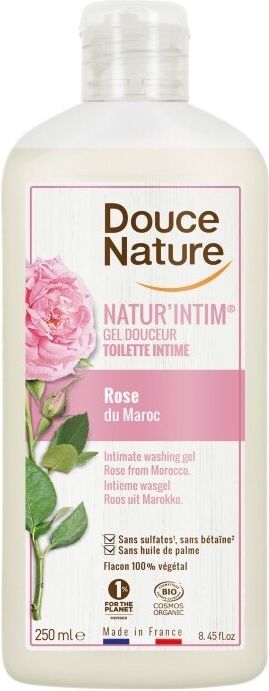
Douce Nature Intimate Rose Water Gel 250 mlHealth and Beauty Intimate hygiene Douce Nature Intimate Rose Water Gel 250 ml Intimate Hygiene Gel enriched with Moroccan rose water Suitable for all skin types. Balances the skin of the intimate area and reduces discomfort How to use: Shake well before use, apply gently to the skin and rinse with plenty of water. In case of contact with eyes, rinse thoroughly and keep out of the reach of children. don't swallow it5,56 £*Shipping: 3,99 £Secure redirect to the provider
-
What is the principle of chromatography and can you give an example of different chromatography methods?
Chromatography is a technique used to separate and analyze complex mixtures based on the differential interactions between the components of the mixture and a stationary phase. The principle of chromatography involves the sample being dissolved in a mobile phase and passed through a stationary phase, where the components of the sample interact differently with the stationary phase, causing them to separate. There are several types of chromatography methods, including gas chromatography (GC), liquid chromatography (LC), and high-performance liquid chromatography (HPLC). In gas chromatography, the mobile phase is a gas, while in liquid chromatography, the mobile phase is a liquid. High-performance liquid chromatography is a more advanced form of liquid chromatography that uses high pressure to separate components more efficiently. **
-
What is the principle of chromatography and can you provide an example of different chromatography methods?
Chromatography is a technique used to separate and analyze complex mixtures based on the differential interactions between the components of the mixture and a stationary phase. The principle of chromatography involves the sample being dissolved in a mobile phase and passed through a stationary phase. The components of the sample interact differently with the stationary phase, causing them to separate based on their affinity for the stationary phase. There are various types of chromatography methods, including gas chromatography (GC), liquid chromatography (LC), and high-performance liquid chromatography (HPLC). In gas chromatography, the mobile phase is a gas, while in liquid chromatography, the mobile phase is a liquid. HPLC is a more advanced form of liquid chromatography that uses high pressure to separate components more efficiently. **
-
How can one explain chromatography in kindergarten?
Chromatography can be explained in kindergarten by using simple language and visuals. One way to explain it is by comparing it to how colors separate when they mix in water. Children can be shown how different colors in markers or food coloring separate and spread out on a paper strip when placed in water. This can help them understand that chromatography is a process that separates different colors or substances based on how fast they move through a material. Overall, using hands-on activities and simple explanations can make chromatography understandable and engaging for kindergarteners. **
-
What is chromatography and how does it work?
Chromatography is a technique used to separate and analyze mixtures of substances based on their different properties. It works by passing a mixture through a stationary phase, which can be a solid or liquid, and a mobile phase, which carries the mixture through the stationary phase. The components of the mixture interact differently with the stationary phase, causing them to move at different rates and separate from each other. This allows for the identification and quantification of the individual components in the mixture. **
* All prices are inclusive of VAT and, if applicable, plus shipping costs. The offer information is based on the details provided by the respective shop and is updated through automated processes. Real-time updates do not occur, so deviations can occur in individual cases. ** Note: Parts of this content were created by AI.