Buy duemmersee.eu ?
We are moving the project
duemmersee.eu .
Are you interested in purchasing the domain
duemmersee.eu ?
domain@kv-gmbh.de · 0541-91531010
Buy duemmersee.eu ?
Where can one buy a 3-liter Brut Imperial Champagne from an old collection?
You can buy a 3-liter Brut Imperial Champagne from an old collection at specialty wine shops, high-end liquor stores, or through online retailers that specialize in rare and collectible wines. You may also find such a bottle at auctions or through private collectors who are willing to sell from their personal collections. It's important to do thorough research and possibly seek the assistance of a wine expert to ensure the authenticity and quality of the bottle before making a purchase. **
Which hobbies involve being outdoors in nature?
Hobbies that involve being outdoors in nature include hiking, birdwatching, gardening, camping, fishing, and photography. These activities allow individuals to connect with the natural world, breathe in fresh air, and enjoy the beauty of the outdoors. Engaging in these hobbies can also provide physical and mental health benefits, such as reducing stress and increasing physical activity. **

Similar search terms for Champagne-Brut-Nature-Franc
Top-Angebote
Products related to Champagne-Brut-Nature-Franc:
-
Champagne Brut Nature Sadi MalotThe Champagne Brut Nature from Maison Sadi Malot is a pure Chardonnay that skillfully combines elegance and finesse with intensity and aromatic complexity. The excellence of the grapes brings fragrant primary aromas, enriched and enhanced by tertiary evolution notes, due to the long aging period on the lees. Its enveloping and harmonious sip, its persistence on the palate, underline its natural gastronomic vocation. It is an important Champagne, to be enjoyed at the table paired with oven-baked fish with flavorful meats, poultry, or delicate white meats.disturb the balance of the environment and biodiversity. The estate is certified HEV (Haute Valeur Environnementale - level 3) and is currently in organic conversion. The great attention to vineyard management yields healthy and ripe grapes, which are gently pressed to extract only the free-run juice. Fermentation takes place in stainless steel tanks and after a short aging, the base wines are blended to create the cuvée. The second fermentation occurs in the bottle as required by the Champenoise Method, with a sur lattes aging of at least 48 months.Brut Nature from Maison Sadi Malot is an intense and rich Champagne Blanc de Blancs, which well expresses the mature and evolved character of a Chardonnay from great terroirs. On tasting, it presents a light yellow color with bright golden reflections. The olfactory profile offers aromas of ripe white and yellow fleshed fruit, citrus hints, floral nuances, notes of bread crust, pain d’épices, and small pastries. The entry on the palate is creamy and soft, with a very expressive fruit, good complexity, and a finish of clear mineral freshness.42,00 £*Shipping: 48,00 £Secure redirect to the provider
-
"""Laurent-Perrier Ultra Brut Brut Nature Champagne - France""""""This truly unique Champagne is made without the addition of any sugar (dosage). In the 19th century, Laurent-Perrier was well known for its \""Grand Vin Sans Sucre,\"" establishing a tradition of non-dosage that continues today as one of the House's..."94,99 $*Shipping: 0,00 $Secure redirect to the provider
-
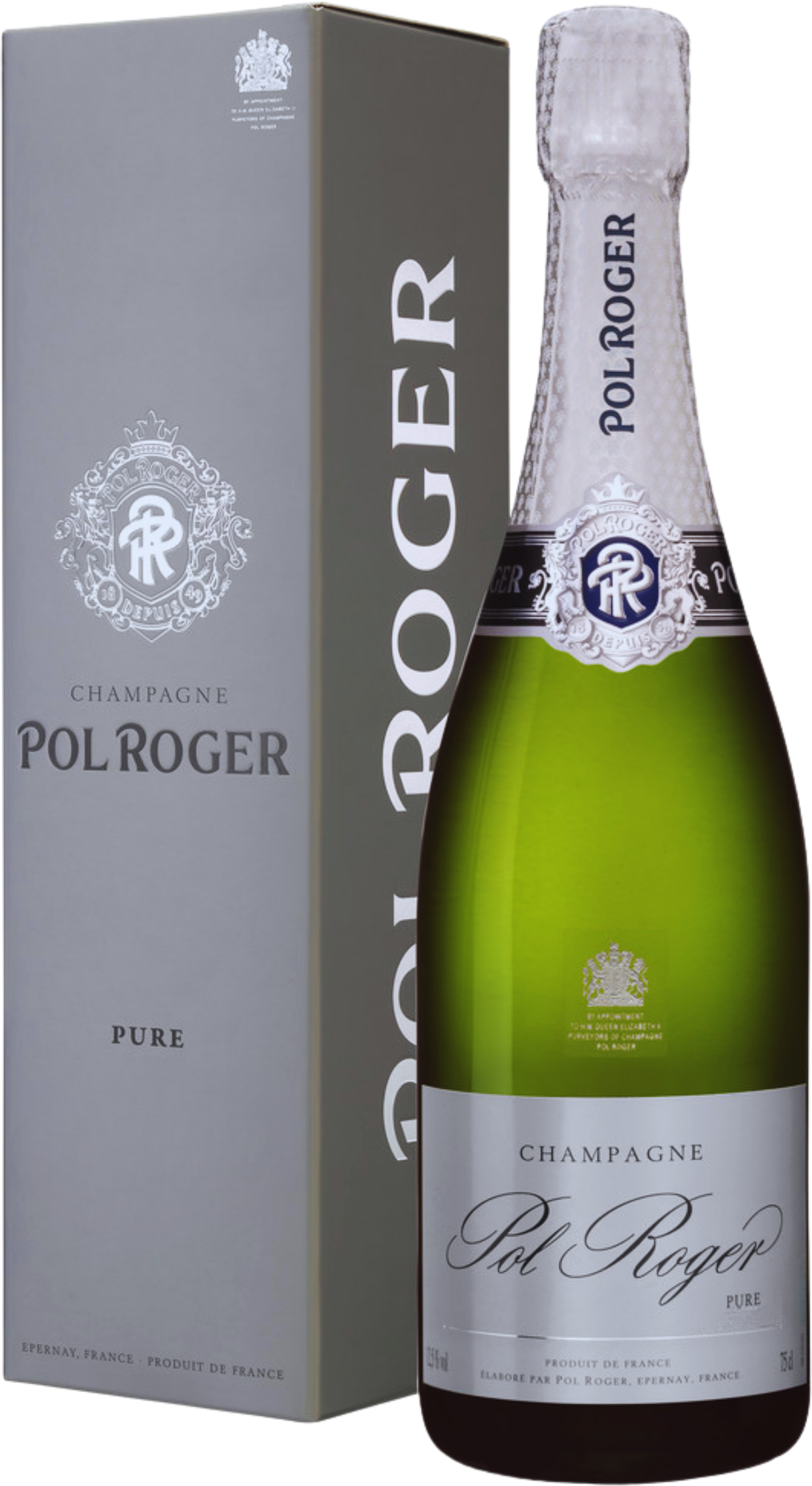
Champagne Brut Nature 'Pure' Pol RogerPol Roger's Champagne Brut Nature "Pure" is the label of the famous Maison in Épernay that expresses a character of refined and essential elegance. It was launched in 2008 to offer enthusiasts a Champagne of extreme purity. It is a cuvée made from the three classic Champagne grape varieties: Pinot Noir, Chardonnay and Meunier, which contribute to creating a blend of great harmony and balance. The rigorous selection of grapes and the long ageing period in the Maison's cellars result in a bottle that combines intensity and expressive complexity with a taut, clear and vertical palate.Pure Pol Roger is a Champagne produced by a historic Maison founded in 1849. For over a century, this brand has been a symbol of elegance and charm, winning over figures such as Winston Churchill and Queen Elizabeth. The Pinot Noir, Chardonnay and Meunier grapes come from 30 different Crus located between the Montagne de Reims, the Vallée de la Marne and the Côte de Blancs. At the end of the harvest, the grapes are gently pressed and fermented separately for each variety in temperature-controlled steel tanks. The vins clairs mature for several months and undergo malolactic fermentation before being blended to create the final cuvée. The second fermentation takes place in the bottle according to the Champenoise method, with ageing of at least 48 months on the lees.The Champagne "Pure" Brut Nature from Maison Pol Roger is a benchmark bottle for all lovers of Champagne with great expressive finesse. It is the result of the desire of one of the most famous Maisons to create a bottle capable of satisfying the taste of connoisseurs who love very low dosages and the finesse of aromas. In the glass, it has a bright golden yellow colour, crossed by a subtle and continuous perlage. The bouquet offers floral notes, fragrant citrus aromas, hints of bread crust and delicate spicy nuances. The palate is vibrant, intense and long, with elegant, subtle aromas and a very fresh, savoury and persistent finish. A label that has now become a classic.73,00 £*Shipping: 48,00 £Secure redirect to the provider
-
Champagne Brut Nature 'Chloé' Vincent CoucheThe Champagne Nature 'Chloé' by Vincent Couche is another extraordinary chapter signed by this dynamic vigneron, to be discovered and experienced again. If wine is meant to convey passions and emotional sensations, this is certainly a spokesperson for it. The production choice of the winery is historically linked to Pinot Noir, cultivated in Buxeuil on calcareous, marly, and clayey soil; but, after the suggestion of Claude Bourguignon, 3 hectares of property were also planted with Chardonnay, this time on very chalky soils located near Montgueux. The cultivation is certified organic and biodynamic, and the processes, both in the vineyard and in the winery, are as minimally invasive as possible. The grapes are vinified rigorously by parcels, and alcoholic fermentation occurs spontaneously, through only indigenous yeasts, 50% in wooden vats and 50% in steel. The blending involves the use of 3 vins de réserve from different vintages, and no sulfur is ever added. After the refermentation in the bottle, the Champagne rests on the lees for at least 24 months on the lees and no dosage occurs.dosage. The Champagne Brut Nature 'Chloé' is pale yellow with golden reflections and fine bubbles. On the nose, there are iodine mineral sensations, red fruit, herbaceous notes, and almost refreshing hints. On the palate, it is broad, tense, but with the characteristic of enhancing freshness and savoriness. Dare to serve at slightly higher than average temperatures. Quiet and incurably seductive.76,00 £*Shipping: 48,00 £Secure redirect to the provider


-
Which camera is suitable for nature and wildlife photography?
A suitable camera for nature and wildlife photography would be a DSLR or mirrorless camera with a high resolution sensor (20+ megapixels) for capturing fine details, a fast and accurate autofocus system for capturing moving subjects, and a weather-sealed body to withstand outdoor conditions. Additionally, a camera with a good burst rate for capturing fast-moving wildlife and a long battery life for extended shooting sessions would be beneficial. Some popular options for nature and wildlife photography include the Canon EOS 90D, Nikon D850, and Sony A7R IV. **
-
Is canal water of artificial nature?
Yes, canal water is of artificial nature. Canals are man-made waterways that are constructed to transport water for irrigation, drainage, or navigation. They are typically dug and maintained by humans to control the flow and distribution of water for various purposes. Therefore, the water found in canals is not naturally occurring, but rather a result of human intervention and engineering. **
-
Why is it actually called Mother Nature and not Father Nature or Human Nature?
The term "Mother Nature" likely originated from ancient cultures that personified nature as a nurturing and life-giving force, similar to the role of a mother. This concept is rooted in the idea of the Earth as a source of sustenance and fertility, which aligns with the nurturing and life-giving qualities traditionally associated with motherhood. Additionally, the association of nature with femininity may also stem from the ancient worship of female deities representing the Earth and fertility. Over time, this association has become deeply ingrained in many cultures and continues to be reflected in the use of the term "Mother Nature." **
-
In which profession do people conduct research outdoors in nature?
People who work as field biologists, ecologists, environmental scientists, geologists, or botanists often conduct research outdoors in nature. These professionals study various aspects of the natural world, such as wildlife, ecosystems, geological formations, or plant life, by collecting data and observations directly from the field. Conducting research outdoors allows them to study the environment in its natural state and gain a deeper understanding of the interactions between living organisms and their surroundings. **

Why do some people not like being outdoors in nature?
Some people may not like being outdoors in nature due to a fear of insects or animals, discomfort with unpredictable weather conditions, or a preference for indoor activities. Others may have physical limitations that make it difficult to navigate outdoor terrain or may simply feel more at ease in urban environments. Additionally, some individuals may have had negative past experiences in nature that have influenced their perception of outdoor spaces. **
In which profession do you conduct research outdoors in nature?
I conduct research outdoors in nature as a field biologist. This profession involves studying various aspects of plants, animals, and ecosystems in their natural habitats. Field biologists often spend extended periods of time in the field, collecting data, observing behaviors, and conducting experiments to better understand the natural world. This hands-on approach to research allows for a deeper appreciation and insight into the complexities of the environment. **
Top-Angebote
Products related to Champagne-Brut-Nature-Franc:
-
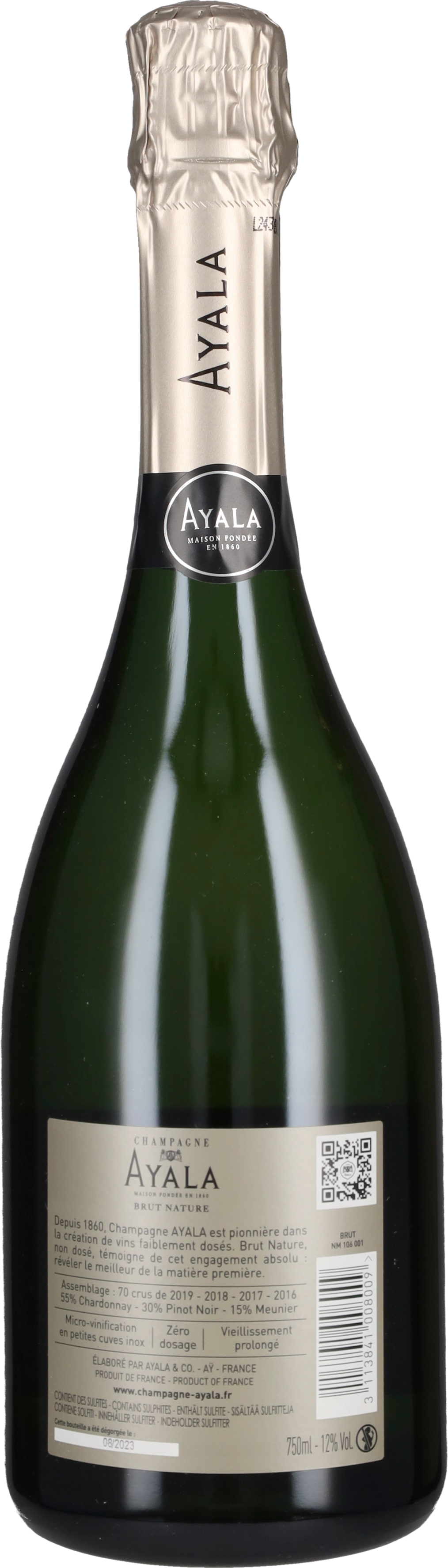
Champagne Brut Nature AyalaThe Ayala Champagne Brut Nature is the clear face of purity, the cuvée made to enhance the vibrant freshness of a taut sip. The absence of dosage requires a strict selection of the best grapes, the ripest and richest in aromas, coming from particularly prized parcels of the estate. It is a cuvée that combines the refined elegance of Chardonnay, the austere structure of Pinot Noir, and the fruity pleasantness of Meunier. The harmonious delicacy of the aromas from superior quality grapes, skillfully vinified with the utmost respect for the raw material, allows one to appreciate the extraordinary excellence of a great pas dosé. The Brut Nature is an Ayala Champagne that comes from grapes sourced from the best parcels of the domaine, located in various areas of the Champagne region: Côte des Blancs, Montagne de Reims, Vallée de la Marne, Aube, Vitry, and Côte de Sézanne. This choice is made prioritizing the full and rich ripeness of the fruit, essential for creating a great brut.nature. During the harvest operations, each individual vineyard is vinified separately. The best bunches undergo a gentle pressing and the free-run must ferments in stainless steel tanks at controlled temperature. After a maturation of a few months, the base wines are blended to create the final cuvée. The second fermentation takes place in the bottle according to the Champenoise Method, with a minimum aging on the lees in the Maison's caves for a period of at least 4 years. The Ayala Champagne Brut Nature is a label dedicated to enthusiasts seeking a sip of clear essentiality, precise and linear, which does not concede anything to easy pleasures. It is a bottle with refined charm, ideal for tasting with seafood, raw fish, sushi, sashimi, caviar, or with a pasta dish featuring sea urchins. Visually, it presents a bright golden color with brilliant reflections and a fine, very persistent perlage. The bouquet is refined and delicate, with aromas of lime, citrus peel, grapefruit, cedar, floral nuances, and aromas of Granny Smith apple and white peach.white. The sip is clear and saline, with a vertical length that leads to a finish of great mineral freshness.48,00 £*Shipping: 48,00 £Secure redirect to the provider
-
Champagne Brut Nature Sadi MalotThe Champagne Brut Nature from Maison Sadi Malot is a pure Chardonnay that skillfully combines elegance and finesse with intensity and aromatic complexity. The excellence of the grapes brings fragrant primary aromas, enriched and enhanced by tertiary evolution notes, due to the long aging period on the lees. Its enveloping and harmonious sip, its persistence on the palate, underline its natural gastronomic vocation. It is an important Champagne, to be enjoyed at the table paired with oven-baked fish with flavorful meats, poultry, or delicate white meats.disturb the balance of the environment and biodiversity. The estate is certified HEV (Haute Valeur Environnementale - level 3) and is currently in organic conversion. The great attention to vineyard management yields healthy and ripe grapes, which are gently pressed to extract only the free-run juice. Fermentation takes place in stainless steel tanks and after a short aging, the base wines are blended to create the cuvée. The second fermentation occurs in the bottle as required by the Champenoise Method, with a sur lattes aging of at least 48 months.Brut Nature from Maison Sadi Malot is an intense and rich Champagne Blanc de Blancs, which well expresses the mature and evolved character of a Chardonnay from great terroirs. On tasting, it presents a light yellow color with bright golden reflections. The olfactory profile offers aromas of ripe white and yellow fleshed fruit, citrus hints, floral nuances, notes of bread crust, pain d’épices, and small pastries. The entry on the palate is creamy and soft, with a very expressive fruit, good complexity, and a finish of clear mineral freshness.42,00 £*Shipping: 48,00 £Secure redirect to the provider
-
"""Laurent-Perrier Ultra Brut Brut Nature Champagne - France""""""This truly unique Champagne is made without the addition of any sugar (dosage). In the 19th century, Laurent-Perrier was well known for its \""Grand Vin Sans Sucre,\"" establishing a tradition of non-dosage that continues today as one of the House's..."94,99 $*Shipping: 0,00 $Secure redirect to the provider
-
Where can one buy a 3-liter Brut Imperial Champagne from an old collection?
You can buy a 3-liter Brut Imperial Champagne from an old collection at specialty wine shops, high-end liquor stores, or through online retailers that specialize in rare and collectible wines. You may also find such a bottle at auctions or through private collectors who are willing to sell from their personal collections. It's important to do thorough research and possibly seek the assistance of a wine expert to ensure the authenticity and quality of the bottle before making a purchase. **
-
Which hobbies involve being outdoors in nature?
Hobbies that involve being outdoors in nature include hiking, birdwatching, gardening, camping, fishing, and photography. These activities allow individuals to connect with the natural world, breathe in fresh air, and enjoy the beauty of the outdoors. Engaging in these hobbies can also provide physical and mental health benefits, such as reducing stress and increasing physical activity. **
-
Which camera is suitable for nature and wildlife photography?
A suitable camera for nature and wildlife photography would be a DSLR or mirrorless camera with a high resolution sensor (20+ megapixels) for capturing fine details, a fast and accurate autofocus system for capturing moving subjects, and a weather-sealed body to withstand outdoor conditions. Additionally, a camera with a good burst rate for capturing fast-moving wildlife and a long battery life for extended shooting sessions would be beneficial. Some popular options for nature and wildlife photography include the Canon EOS 90D, Nikon D850, and Sony A7R IV. **
-
Is canal water of artificial nature?
Yes, canal water is of artificial nature. Canals are man-made waterways that are constructed to transport water for irrigation, drainage, or navigation. They are typically dug and maintained by humans to control the flow and distribution of water for various purposes. Therefore, the water found in canals is not naturally occurring, but rather a result of human intervention and engineering. **
Similar search terms for Champagne-Brut-Nature-Franc
-
Champagne Brut Nature 'Pure' Pol RogerPol Roger's Champagne Brut Nature "Pure" is the label of the famous Maison in Épernay that expresses a character of refined and essential elegance. It was launched in 2008 to offer enthusiasts a Champagne of extreme purity. It is a cuvée made from the three classic Champagne grape varieties: Pinot Noir, Chardonnay and Meunier, which contribute to creating a blend of great harmony and balance. The rigorous selection of grapes and the long ageing period in the Maison's cellars result in a bottle that combines intensity and expressive complexity with a taut, clear and vertical palate.Pure Pol Roger is a Champagne produced by a historic Maison founded in 1849. For over a century, this brand has been a symbol of elegance and charm, winning over figures such as Winston Churchill and Queen Elizabeth. The Pinot Noir, Chardonnay and Meunier grapes come from 30 different Crus located between the Montagne de Reims, the Vallée de la Marne and the Côte de Blancs. At the end of the harvest, the grapes are gently pressed and fermented separately for each variety in temperature-controlled steel tanks. The vins clairs mature for several months and undergo malolactic fermentation before being blended to create the final cuvée. The second fermentation takes place in the bottle according to the Champenoise method, with ageing of at least 48 months on the lees.The Champagne "Pure" Brut Nature from Maison Pol Roger is a benchmark bottle for all lovers of Champagne with great expressive finesse. It is the result of the desire of one of the most famous Maisons to create a bottle capable of satisfying the taste of connoisseurs who love very low dosages and the finesse of aromas. In the glass, it has a bright golden yellow colour, crossed by a subtle and continuous perlage. The bouquet offers floral notes, fragrant citrus aromas, hints of bread crust and delicate spicy nuances. The palate is vibrant, intense and long, with elegant, subtle aromas and a very fresh, savoury and persistent finish. A label that has now become a classic.73,00 £*Shipping: 48,00 £Secure redirect to the provider
-
Champagne Brut Nature 'Chloé' Vincent CoucheThe Champagne Nature 'Chloé' by Vincent Couche is another extraordinary chapter signed by this dynamic vigneron, to be discovered and experienced again. If wine is meant to convey passions and emotional sensations, this is certainly a spokesperson for it. The production choice of the winery is historically linked to Pinot Noir, cultivated in Buxeuil on calcareous, marly, and clayey soil; but, after the suggestion of Claude Bourguignon, 3 hectares of property were also planted with Chardonnay, this time on very chalky soils located near Montgueux. The cultivation is certified organic and biodynamic, and the processes, both in the vineyard and in the winery, are as minimally invasive as possible. The grapes are vinified rigorously by parcels, and alcoholic fermentation occurs spontaneously, through only indigenous yeasts, 50% in wooden vats and 50% in steel. The blending involves the use of 3 vins de réserve from different vintages, and no sulfur is ever added. After the refermentation in the bottle, the Champagne rests on the lees for at least 24 months on the lees and no dosage occurs.dosage. The Champagne Brut Nature 'Chloé' is pale yellow with golden reflections and fine bubbles. On the nose, there are iodine mineral sensations, red fruit, herbaceous notes, and almost refreshing hints. On the palate, it is broad, tense, but with the characteristic of enhancing freshness and savoriness. Dare to serve at slightly higher than average temperatures. Quiet and incurably seductive.76,00 £*Shipping: 48,00 £Secure redirect to the provider
-
Champagne Brut Nature 'Fauve' Famille DelouvinThe champenoise reality of Famille Delouvin presents the Champagne Brut Nature ‘Fauve’, a sparkling wine with a vibrant and mineral character that reflects the unique characteristics of the territory. The Delouvin family operates in the Vallée de la Marne with the status of Récoltant Manipulant, working exclusively with grapes that they cultivate themselves within their just over 7 hectares of owned vineyards, distributed across 36 different parcels. Famille Delouvin Champagne Brut Nature ‘Fauve’ consists of a blend of two of the three traditional champenoise grape varieties, namely Chardonnay (75%) and Pinot Meunier (25%). The vines are located within the village of Vandières, in the area of the Vallée de la Marne, on soils composed of exposed chalk with a south-facing exposure. Following the harvest, the grapes are transferred to the winery and vinified in white through soft pressing and alcoholic fermentation in temperature-controlled stainless steel tanks, the same wine vessels where the liquid remains at mature for 6 months. At this point, without undergoing malolactic fermentation, the sparkling wine undergoes the second fermentation according to the Champenoise Method, associated with over 66 months of aging on the lees. The sparkling wine is finally subjected to degorgement and no dosage, with the topping up done using the same wine. The color of Famille Delouvin Champagne ‘Fauve’ Brut Nature is golden yellow with brilliant reflections and refined perlage. On the nose, intriguing hints of citrus and green apple are accompanied by fresh herbaceous notes and fragrant sensations of brioche bread. The freshness and mineral vein are sharp on the palate, where the olfactory notes reappear, describing a long persistence, even more enhanced by the incisive savory character.59,00 £*Shipping: 48,00 £Secure redirect to the provider
-
"""Champagne Tarlant""" """Champagne Tarlant Zero Brut Nature Champagne - France""""""1/3 Chardonnay, 1/3 Pinot Noir, 1/3 Pinot Meunier. This cuvée makes up 70-90% of Tarlant's production and \""is my daily obsession,\"" says Benoît Tarlant. Zero reflects the Tarlant emphasis on unadorned terroir, with no selected yeasts and no dosage..."77,99 $*Shipping: 0,00 $Secure redirect to the provider
-
Why is it actually called Mother Nature and not Father Nature or Human Nature?
The term "Mother Nature" likely originated from ancient cultures that personified nature as a nurturing and life-giving force, similar to the role of a mother. This concept is rooted in the idea of the Earth as a source of sustenance and fertility, which aligns with the nurturing and life-giving qualities traditionally associated with motherhood. Additionally, the association of nature with femininity may also stem from the ancient worship of female deities representing the Earth and fertility. Over time, this association has become deeply ingrained in many cultures and continues to be reflected in the use of the term "Mother Nature." **
-
In which profession do people conduct research outdoors in nature?
People who work as field biologists, ecologists, environmental scientists, geologists, or botanists often conduct research outdoors in nature. These professionals study various aspects of the natural world, such as wildlife, ecosystems, geological formations, or plant life, by collecting data and observations directly from the field. Conducting research outdoors allows them to study the environment in its natural state and gain a deeper understanding of the interactions between living organisms and their surroundings. **
-
Why do some people not like being outdoors in nature?
Some people may not like being outdoors in nature due to a fear of insects or animals, discomfort with unpredictable weather conditions, or a preference for indoor activities. Others may have physical limitations that make it difficult to navigate outdoor terrain or may simply feel more at ease in urban environments. Additionally, some individuals may have had negative past experiences in nature that have influenced their perception of outdoor spaces. **
-
In which profession do you conduct research outdoors in nature?
I conduct research outdoors in nature as a field biologist. This profession involves studying various aspects of plants, animals, and ecosystems in their natural habitats. Field biologists often spend extended periods of time in the field, collecting data, observing behaviors, and conducting experiments to better understand the natural world. This hands-on approach to research allows for a deeper appreciation and insight into the complexities of the environment. **
* All prices are inclusive of VAT and, if applicable, plus shipping costs. The offer information is based on the details provided by the respective shop and is updated through automated processes. Real-time updates do not occur, so deviations can occur in individual cases. ** Note: Parts of this content were created by AI.